
Overview of Ratios and Proportions Worksheets PDF

This PDF bundle offers a concise introduction to ratios, proportions, and percents, featuring three worksheets that cover properties of proportions, ratio notation, and real‑world word problems. Designed for quick classroom use, it blends clear explanations with practice exercises that reinforce conceptual understanding.
Purpose and Educational Value
These ratios and proportions worksheets PDF serve as a versatile resource for educators seeking to reinforce foundational mathematical concepts in a structured, engaging manner. By integrating concise introductory notes with a trio of progressively challenging worksheets, the bundle ensures that learners not only grasp the mechanics of ratio notation but also appreciate the real‑world relevance of proportional reasoning. Each worksheet is meticulously designed to target key learning objectives: identifying equivalent ratios, solving proportion equations, and translating word problems into algebraic expressions. The inclusion of varied difficulty levels—from straightforward proportion calculations to more complex word‑problem scenarios—caters to diverse classroom needs, allowing teachers to differentiate instruction and provide targeted support. Moreover, the PDF format offers seamless accessibility: teachers can instantly download, print, or share the materials, while students can work independently or in collaborative settings. The accompanying solution keys and teacher guides further enhance instructional value, offering step‑by‑step explanations that facilitate formative assessment and feedback; Ultimately, this resource promotes critical thinking, problem‑solving skills, and mathematical fluency, equipping students with the confidence to tackle real‑life situations that involve ratios, proportions, and percentages. and building analytical skills STEM. with confidence! By engaging students with these thoughtfully curated worksheets, teachers can foster a deeper appreciation for the elegance of ratios and proportions, while simultaneously building the analytical mindset essential for success across STEM disciplines. and critical thinking. soon for lifelong learning
Grade Levels and Curriculum Alignment
Designed for middle‑school mathematics, the PDF set aligns with Common Core State Standards (CCSS) for 6th‑8th grades, specifically CCSS.MATH.CONTENT.6;RP.A.1 through 6.RP.A.3, which emphasize understanding ratios, proportional reasoning, and the use of proportional relationships to solve real‑world problems. The worksheets also support state‑specific standards such as the Texas Essential Knowledge and Skills (TEKS) for 7th‑grade mathematics (TEKS 112.36;1) and the California Common Core Math Standards (CCCS) for 8th grade (CCCS 8.RP). By mapping each worksheet to these standards, teachers can easily justify the inclusion of the materials in their lesson plans and demonstrate compliance during state assessments.
For high‑school applications, the bundle extends to Algebra I and Algebra II curricula, addressing CCSS.MATH.CONTENT.HSA.REI.A.1–A.3, which focus on solving linear equations, interpreting linear functions, and applying proportional reasoning to algebraic models. The worksheets include advanced proportion problems that require cross‑multiplication and the manipulation of variables on both sides of an equation, preparing students for the algebraic thinking required in college‑prep courses. Additionally, the PDF is compatible with the International Baccalaureate (IB) Mathematics: Analysis and Approaches syllabus, where proportional reasoning is a core component of the mathematical toolkit.
Teachers can use the alignment chart embedded in the PDF to quickly reference the specific standard addressed by each question. The chart lists the standard code, a brief description, and the corresponding worksheet section, facilitating targeted instruction and efficient grading. This level of detail ensures that the worksheets not only reinforce mathematical concepts but also serve as a legitimate resource for curriculum mapping, professional development, and instructional planning across diverse educational settings.
Alignment supports integration across math units, engagement daily.

Key Mathematical Concepts Covered
Students explore ratio notation, proportional relationships, cross‑multiplication, equivalent fractions, and real‑world applications. Worksheets reinforce unit, rate, and percent conversions, deepening understanding of scaling, similarity, and algebraic modeling. modeling. and practice daily.
Definition of Ratios and Their Notation

A ratio compares two quantities, showing how many times one contains the other. It can appear as a fraction (e.g., 3/4), a colon (3:4), or the word “to” (3 to 4). The first term, the numerator, represents the quantity being compared; the second, the denominator, is the reference. For example, 5:2 means that for every 5 units of the first quantity, there are 2 units of the second, so the first is 2.5 times larger.

Two ratios are equivalent if one can be obtained from the other by multiplying or dividing both terms by the same non‑zero number. For instance, 6:8 simplifies to 3:4 by dividing each term by 2. Conversely, 3:4 can be expanded to 12:16 by multiplying each term by 4. Recognizing equivalent ratios helps students solve proportional equations and scale real‑world scenarios.
Ratios can appear in many contexts. In science they may be unitless numbers like 1.5:1, while in cooking a recipe might state 1 cup of flour to 2 cups of water. Knowing how to read and write ratios in any of these formats lets students convert between units, calculate percentages, and analyze proportional data. Students also learn to express ratios as percentages, such as 3:7 being approximately 42.9%.
Cross‑multiplication is a key method for solving equations with ratios. By multiplying the numerator of one ratio by the denominator of the other and vice versa, students find unknown values. For example, if 4:5 = x:20, then 4×20 = 5×x, giving x = 16. This technique also aids in unit conversions, treating the conversion factor as a ratio.
Mastering ratio notation builds a strong foundation for algebraic thinking and real‑world problem solving in daily life now.
Proportional relationships describe a consistent, linear connection between two quantities: when one changes, the other changes by a . In a proportional pair, the ratio of the two numbers remains constant, so the graph of the relationship is a straight line that passes through the origin. This property allows students to predict outcomes, scale measurements, and solve real‑world problems such as converting units, budgeting, or comparing rates. The key concept is that if a:b = c:d, then a is to b as c is to d, and the cross‑product a·d equals b·c. Recognizing proportionality also involves simplifying ratios to their lowest terms, which reveals the underlying unit of comparison. For example, 12:18 simplifies to 2:3, indicating that for every 2 units of the first quantity, there are 3 units of the second. In educational worksheets, students practice identifying proportional relationships by checking whether two ratios are equivalent, using cross‑multiplication, or graphing points to confirm a straight‑line pattern. Understanding proportional relationships equips learners with a versatile tool for algebraic reasoning, data analysis, and everyday decision making.
Teachers can embed these worksheets into blended learning sessions, allowing students to practice ratio skills before tackling more complex algebraic concepts. By incorporating real‑world scenarios—such as recipe scaling, map reading, or speed‑time calculations—students see the relevance of proportional reasoning. Assessment can be immediate with the provided solution keys, while teacher guides suggest extensions like exploring unit rates or creating custom word problems. Great work
Cross‑Multiplication Method
Cross‑multiplication is the fundamental tool for solving equations of the form a:b = c:d. By multiplying the numerator of one ratio by the denominator of the other and vice versa, students test equality through the cross‑product: a·d = b·c. This method confirms proportionality and lets learners isolate an unknown variable. For instance, solving 5:x = 20:4 involves multiplying 5 by 4 to get 20, then setting 20 equal to x·5, yielding x = 4. Worksheets provide practice with diverse contexts—scaling recipes, converting currencies, and analyzing speed‑distance problems—ensuring students can correctly pair ratios for cross‑multiplication. The systematic approach requires identifying the four terms, forming cross‑products, solving the resulting equation, and checking the solution by substituting back into the original ratio. Cross‑multiplication also handles compound ratios and mixed proportions. For example, to find how many gallons of paint are needed to cover a 12‑by‑8‑foot wall, given that 1 gallon covers 16 square feet, set up 1:16 = x:96 (since 12×8=96). Cross‑multiplying yields 1×96 = 16x, so x = 6 gallons. Teachers can challenge students with word problems that require interpreting ambiguous statements, encouraging careful extraction of relevant ratios before applying the cross‑product test. Mastery of cross‑multiplication equips learners to navigate complex mathematical relationships, fostering analytical thinking and precision. Many worksheets include aids—ratio bars, number lines, or interactive digital tools—to illustrate how cross‑multiplication preserves proportional relationships. Drag‑and‑drop activities and spreadsheet formulas provide instant feedback, allowing students to focus on interpreting results rather than manual calculation. Blended approaches cater to diverse learning styles and promote conceptual understanding. By mastering cross‑multiplication, students build confidence in handling proportional reasoning across algebraic and real‑world contexts, making it an essential skill for progressing toward higher‑level mathematics.

Worksheet Features and Formats
PDFs include multiple choice, fill‑in‑the‑blank, and word problems. Levels range from easy to advanced, supporting progressive learning. Printable versions ensure accessibility, while solution keys and teacher guides aid instruction. All worksheets are downloadable screen‑reader friendly!Teachers can download PDFs instantly!
Question Types: Multiple Choice, Fill-in-the-Blank, Word Problems
These PDFs present a balanced mix of question formats that cater to diverse learning styles. Multiple‑choice items test quick recognition of ratio relationships and proportion equivalence, offering five answer choices that reinforce conceptual clarity. Fill‑in‑the‑blank problems require students to calculate missing values, encouraging active engagement with cross‑multiplication and unit conversion. Word problems translate real‑world scenarios—such as recipe adjustments, travel time calculations, and financial budgeting—into ratio and proportion equations, fostering critical thinking and application skills. Each type is carefully calibrated to progress from simple verification to complex reasoning, ensuring that learners build confidence before tackling advanced challenges. The worksheets also include brief explanatory notes that guide students through the reasoning steps, making the materials suitable for both independent study and guided classroom instruction. Additionally, each worksheet contains a short reflection prompt that encourages students to articulate the strategy they used, promoting metacognitive awareness and reinforcing the learning process. Teachers can customize the difficulty by adjusting the numerical ranges or by incorporating real‑life data sets, making the material adaptable for diverse classroom contexts. The PDF format ensures that the worksheets remain accessible across devices, and the included solution keys allow for quick grading while preserving classroom engagement. Overall,the collection offers a comprehensive, versatile resource that supports mastery of ratios and proportions through varied,engagingand sound practices.
Difficulty Levels: Easy, Intermediate, Advanced
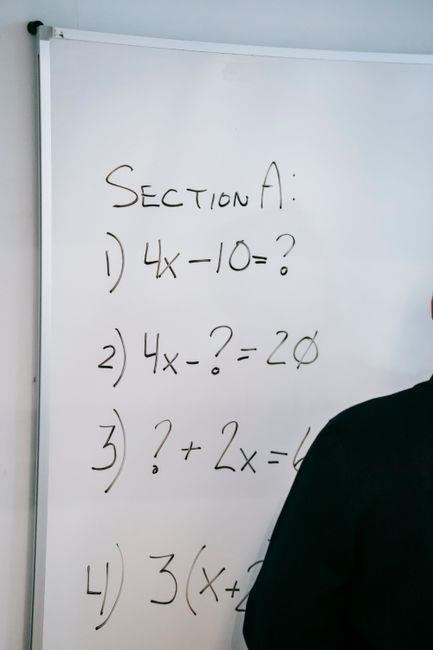
Students begin with the Easy level, featuring straightforward ratio comparisons and proportion verification tasks that reinforce basic concepts. The problems use small integers and simple fractions, allowing learners to focus on identifying equivalent ratios and applying cross‑multiplication without complex calculations. Transitioning to Intermediate, the worksheets introduce mixed‑number ratios, unit‑rate conversions, and word problems that require multiple steps, encouraging students to integrate algebraic reasoning with real‑world contexts. Here, the difficulty is increased by incorporating larger numbers, decimals, and the need to solve for unknowns in proportion equations. The Advanced tier challenges learners with multi‑step word problems, compound ratios, and the derivation of formulas from given data sets. These tasks demand a deeper understanding of proportional relationships, the ability to manipulate algebraic expressions, and the skill to justify each step logically. Across all levels, the PDFs maintain consistent formatting, clear instructions, and concise solution keys, enabling teachers to differentiate instruction and monitor progress efficiently. The structured progression ensures that students build a solid foundation before tackling more complex proportional reasoning, making the resource adaptable for varied classroom settings and individual learning needs. Teachers can tailor the difficulty by adjusting numerical ranges or incorporating real‑life data, ensuring relevance and engagement. The PDF format supports accessibility features such as screen‑reader compatibility and high‑contrast printing, making the resource inclusive. Each worksheet includes a concise solution key that explains reasoning step by step, allowing teachers to provide immediate feedback and students to self‑check. The clear layout and consistent notation help students develop confidence in handling ratios and proportions across mathematical domains. This structured approach supports differentiated learning and encourages mastery of ratio concepts. Students can revisit earlier levels to reinforce skills before advancing today. Teachers can also integrate these worksheets into blended learning modules.
Printable PDF Options and Accessibility
Teachers can download the entire set of ratio and proportion worksheets as a single, high‑resolution PDF that preserves formatting across devices. The file is optimized for both screen viewing and paper printing, with clear headings, numbered questions, and ample space for handwritten solutions. Each worksheet includes a header that lists the title, grade level, and difficulty tier, ensuring that educators can quickly identify the appropriate resource for their lesson plan. The PDF is fully searchable, allowing students and teachers to locate specific terms or problems using the built‑in search function. For classrooms that rely on assistive technology, the document complies with WCAG 2.1 AA standards, featuring proper heading hierarchy, high‑contrast text, and descriptive alt tags for any embedded images or symbols. The text is selectable, making it compatible with screen readers such as NVDA and JAWS, which read the content aloud in a natural cadence. Additionally, the PDF includes a hidden layer of solution keys that can be revealed by toggling the “Show Answers” button, providing immediate feedback while maintaining the integrity of the original worksheet. To accommodate diverse learning environments, the file is available in both a standard 8.5×11 format and a larger 11×17 version, which can be printed on wide‑format printers for group activities or classroom displays. The design also supports color‑blind users by employing color‑blind friendly palettes and avoiding reliance on color alone to convey meaning. For educators who prefer digital interaction, the PDF can be imported into learning management systems such as Canvas, Moodle, or Google Classroom, where it can be embedded as a resource or converted into a fillable form. The fillable version includes interactive fields for numeric answers, checkboxes for multiple‑choice selections, and text boxes for short responses, all of which automatically validate entries against the solution key. This dual approach—static printable pages and dynamic fillable forms—ensures that the worksheets remain accessible to students with varying technological access and learning preferences. Finally, the file is compressed to a modest size, reducing download time while retaining clarity, making it suitable for low‑bandwidth environments. By offering a versatile, accessible PDF format, the ratio and proportion worksheets support inclusive education and streamline classroom preparation. The resource also includes a quick‑reference cheat sheet that summarizes key ratio formulas and conversion tips, which can be printed on a single sheet for easy classroom reference. This cheat sheet is designed to be compact yet comprehensive, fitting neatly on a standard 8.5×11 page without compromising legibility. By providing both detailed worksheets and a concise summary, the PDF caters to a wide range of instructional styles and student needs, ensuring that every learner can engage with ratio concepts at their own pace.
Solution Keys and Teacher Guides

The solution key is meticulously organized by worksheet and question number, offering step‑by‑step explanations that illuminate the reasoning behind each answer. For multiple‑choice items, the key indicates the correct option and provides a brief rationale; for fill‑in‑the‑blank and word‑problem solutions, it includes full calculations and intermediate steps. Teachers can verify student work, pinpoint common misconceptions, and adjust pacing. The guide also contains pedagogical notes on scaffolding instruction, suggesting extensions for anced learners and real‑world contexts. A printable cheat sheet summarizes key ratio formulas, cross‑multiplication rules, and conversion tips, making it easy to reference during lessons. The key is formatted for easy navigation, with clickable links that jump to the corresponding worksheet section. For digital use, the key is embedded in a hidden layer that can be toggled on or off, preserving worksheet integrity while granting instant access to answers.
The teacher guide also offers formative assessment strategies, such as exit tickets, peer‑review templates, and self‑assessment checklists. These tools help monitor understanding in real time and provide immediate feedback. The guide recommends integrating technology by using interactive whiteboards to display live solutions, or by assigning digital quizzes that automatically grade and report results. For classrooms with diverse learners, the guide suggests using visual aids like ratio bars, proportion grids, and color‑coded charts to reinforce concepts. It also provides sample lesson plans that span a 45‑minute period, including warm‑up activities, guided practice, independent work, and a closing discussion. Each lesson plan is annotated with suggested timing, learning objectives, and alignment to Common Core standards. Finally, the guide encourages reflective practice by prompting teachers to record observations, student questions, and adjustments made during instruction, fostering continuous improvement for future in students.